
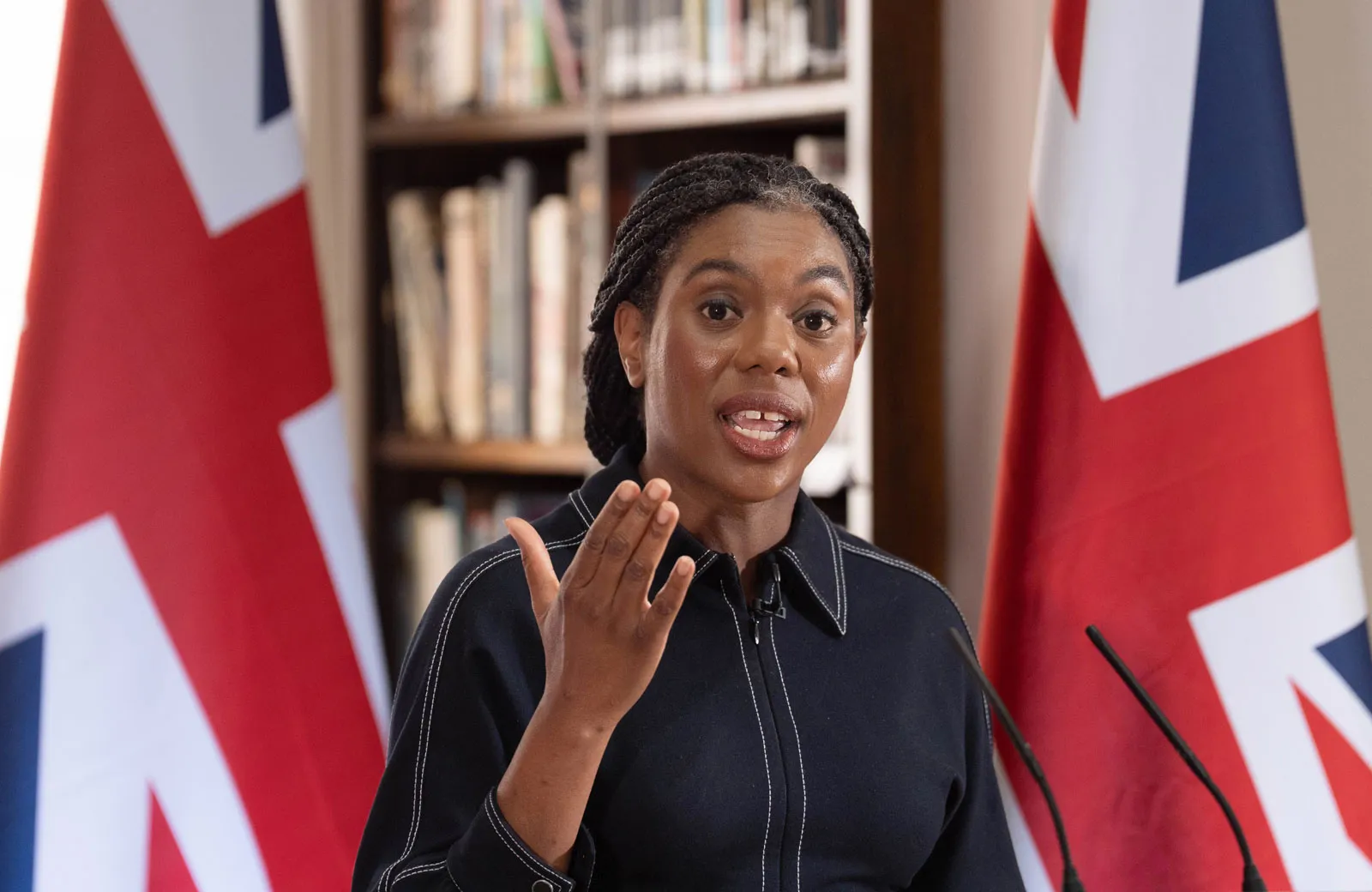
In a significant development for the CANZUK movement, Conservative Party Leader Kemi Badenoch has thrown her support behind the proposed economic bloc between Canada, Australia, New Zealand, and the United Kingdom.
According to reports, Badenoch has endorsed the CANZUK initiative as a means to prevent Britain from becoming a “minor state” in an increasingly fragmented world order. This marks the first time the current Conservative Leader has explicitly backed the proposal, giving it unprecedented mainstream political credibility.
Why this matters
Badenoch’s support is a gamechanger for several reasons:
Mainstream Political Backing
With the Leader of the Opposition now backing CANZUK, the proposal moves from grassroots advocacy to serious policy consideration. This follows similar endorsements from Conservative Party leaders in Canada, where both Prime Minister Mark Carney and Opposition Leader Pierre Poilievre have expressed support.
Economic Security Argument
The “vassal state” framing speaks to a growing concern across the political spectrum: that Britain risks becoming overly dependent on larger powers—whether the United States, China, or the European Union—without sufficient leverage to protect its own interests.
CANZUK offers an alternative: a partnership of equals with nations that share Britain’s values, institutions, and interests.
Cross-Party Momentum
Badenoch’s endorsement adds to a growing consensus. In recent weeks:
- Pierre Poilievre (Canadian Conservative Leader) delivered a landmark CANZUK speech in London
- Mark Carney (Canadian Prime Minister) signed a “strategic cousins” agreement with Australia
- Andrew Rosindell (Reform UK MP and CANZUK champion) continues to advocate in Parliament
The Economic Case
The combined GDP of CANZUK nations exceeds $6.5 trillion, creating one of the world’s largest potential economic blocs. The four nations share:
- Common law legal systems
- Parliamentary democracies
- The English language
- King Charles III as head of state
- Five Eyes intelligence partnership (Canada, UK, Australia, NZ, plus US)
This existing infrastructure means CANZUK wouldn’t require building new institutions from scratch—it would enhance cooperation where it already exists.
What Badenoch’s Support Means
For CANZUK advocates, Badenoch’s backing represents a watershed moment. The Conservative Party, despite its current polling difficulties, remains one of Britain’s two major political forces. Having its leader champion the cause ensures:
- Parliamentary scrutiny: CANZUK will be debated in the Commons
- Media attention: Major outlets will cover the proposal seriously
- Policy development: The Conservative Party may develop detailed CANZUK plans
- Pressure on government: Labour will be forced to respond
The Path Forward
Badenoch’s endorsement doesn’t mean CANZUK will happen overnight. Significant obstacles remain, including:
- Negotiating complex trade and migration agreements
- Coordinating four sovereign nations with different priorities
- Managing relationships with the US, EU, and other major powers
- Building public support across all four countries
However, the trend is clear. What began as a niche proposal a decade ago has now attracted support from:
- Conservative Party leaders in both the UK and Canada
- The Canadian Prime Minister (Liberal)
- Multiple MPs and Lords across parties
- Influential think tanks and commentators
Conclusion
Kemi Badenoch’s backing of CANZUK as an alternative to Britain becoming a “minor state” represents a significant escalation in the proposal’s political profile. With leaders across the political spectrum in multiple CANZUK nations now supporting closer ties, the question is no longer whether CANZUK will be seriously considered—it’s when and how it will be implemented.
As Badenoch and other supporters argue, in an era of great power competition and economic uncertainty, the natural partnership between four like-minded democracies offers a compelling path forward.
The CANZUK moment may have finally arrived.
Image – Stefan Rousseau—PA Images/Getty Images